
What if the most dangerous moment in a DeFi transaction is not signing it, but misunderstanding what the signature authorizes? A wallet may show a familiar token, a recognizable protocol, and a transaction that appears routine. Yet the same click can trigger an unexpected approval, route assets through an unfamiliar contract, or spend more than the user intended. Multi-chain transaction simulation addresses this gap by offering a preview of what a transaction is likely to do before it is submitted. It is not a crystal ball, and it does not replace judgment. Used correctly, however, simulation changes wallet security from a blind-signing exercise into a verification process.
This matters especially for users who move between Ethereum and other EVM-compatible networks. The applications may look similar, but each chain has its own contracts, balances, liquidity conditions, gas market, and recent state. A transaction that is safe on one network can be meaningless or dangerous on another. A modern multi-chain wallet therefore has to answer more than “Can this transaction be signed?” It should help the user ask, “Which assets will move, which permissions will change, and which contracts will receive control?”
What a transaction simulation actually does
At a technical level, a simulation usually executes a proposed transaction against a representation of the chain’s current state without broadcasting it as a confirmed transaction. On EVM networks, this can involve a read-only call that follows the transaction’s logic: contract functions are invoked, conditions are evaluated, and the resulting changes are estimated. The wallet can then interpret the result and present likely asset transfers, approvals, contract interactions, and failures in a human-readable form.
The important word is “likely.” A simulation is an analysis of a particular transaction under a particular state. It is not a guarantee about every possible outcome after the transaction reaches the network. Between simulation and confirmation, prices can move, liquidity can change, a block can be mined, or a protocol’s state can be altered. Some transactions also depend on information that is difficult to model perfectly, including external price feeds, block timing, signature permissions, or interactions with contracts that behave differently depending on the caller.
This creates a useful mental model: simulation is closer to a pre-flight test than to an insurance policy. It can reveal that a swap would return an unexpectedly small amount, that a supposedly simple interaction would transfer a non-trivial token balance, or that a contract call would fail because of insufficient gas or an unmet condition. It can also expose a mismatch between the user’s mental description—“deposit funds”—and the transaction’s actual behavior, such as approving a spender first or interacting with a contract that is not the expected application.
Why multi-chain use makes the problem harder
Users often treat EVM compatibility as if it means identical security conditions. It does not. EVM-compatible chains share important programming conventions, but they do not share one universal state. Contract addresses, token deployments, bridge infrastructure, RPC responses, liquidity pools, and protocol versions can differ. Even when an application uses the same brand and interface across networks, the underlying contracts deserve separate verification.
That is why a multi-chain wallet needs network context in addition to transaction decoding. A useful review should distinguish the chain being used, the destination contract, the assets leaving the wallet, the assets expected in return, and any permissions granted. Chain awareness can prevent a common category error: seeing a familiar token symbol and assuming it represents the same asset, issuer, or contract deployment everywhere. Symbols and logos are interface conveniences, not cryptographic identity.
Cross-chain activity introduces another boundary. A wallet can simulate the transaction submitted on the source chain, but it may not be able to fully simulate every later step performed by a bridge, relayer, solver, or destination-chain contract. The user may sign a source-chain deposit while the final result depends on systems outside that transaction. In such cases, the simulation remains valuable, but its scope must be understood. It can validate the first leg without proving that the entire cross-chain journey will be completed as expected.
What simulation can catch—and what it cannot
Simulation is particularly useful for catching discrepancies between the interface and the transaction payload. Suppose a decentralized exchange page describes a token swap, but the transaction preview shows a large approval to an unfamiliar spender. That difference deserves investigation before signing. Likewise, if a claim page produces a transaction that sends assets away rather than receiving them, the preview can turn a vague suspicion into a concrete warning.
It can also identify failed transactions before users spend gas. A failed transaction is not always a security incident, but repeated failures can become costly and may indicate a stale quote, an incorrect network, an expired deadline, or a contract condition the user has not met. Reviewing the simulation can help separate “this action is economically unattractive” from “this action is technically invalid.” Those are different problems and call for different responses.
Still, simulation has meaningful blind spots. It may not detect a malicious outcome if the transaction behaves normally during simulation but changes later. It may not determine whether a protocol’s economic assumptions are sound. A transaction can execute exactly as simulated and still expose the user to impermanent loss, liquidation, oracle risk, bridge risk, governance risk, or a token whose value collapses. Execution safety and investment safety are related, but they are not the same thing.
There is also a social-engineering limit. A wallet can accurately display that a user is granting a contract permission to spend a token. It cannot decide whether the user intended to grant that permission to that particular application. The user still needs to verify the website, domain, protocol, and requested scope. Simulation improves the evidence available at signing time; it does not remove the need to establish trust in the application itself.
A practical verification workflow for DeFi users
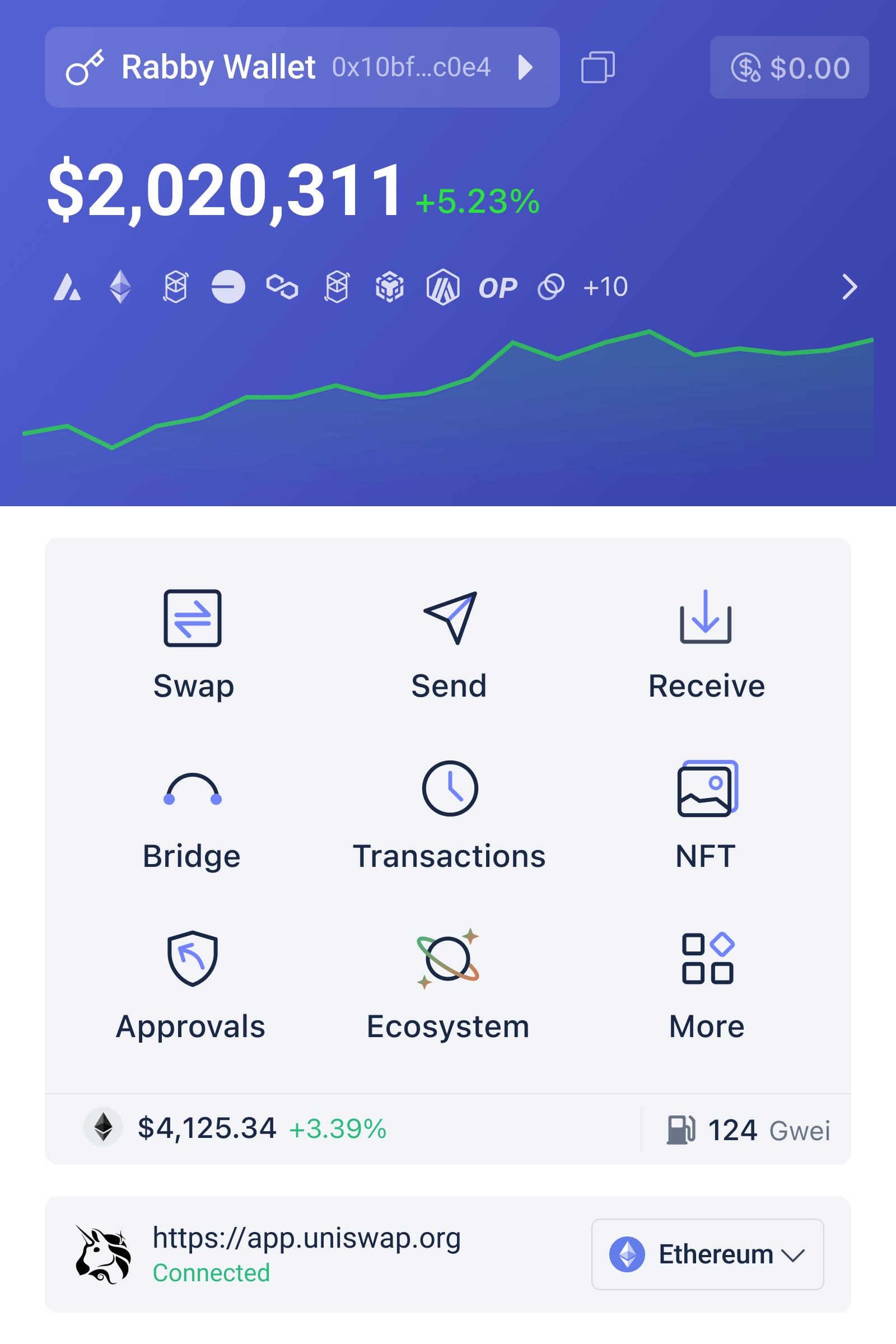
Before installing or using a browser wallet extension, users should obtain it through a source they can independently verify and confirm that the browser’s extension details match the expected publisher. For readers evaluating the rabby wallet, the security value is not simply having another interface for signing. The more important question is whether the wallet helps make transaction intent legible across the networks and applications the user actually uses.
Once a transaction is prepared, start with the network. Confirm that the selected chain is the one intended, especially when several networks display similar assets and applications. Next, inspect the action rather than relying only on its label. Look for the contract being called, the token being approved, the amount being transferred, and the expected asset received. If the transaction involves an approval, ask whether the allowance is limited to the amount needed or is effectively open-ended.
Then compare the simulation with the application’s stated purpose. A swap should look like a swap. A deposit should not unexpectedly include a transfer to an unrelated recipient. A mint should not require an unexplained approval for a valuable asset. If the preview is unavailable, incomplete, or inconsistent with the interface, that is not proof of fraud—but it is a reason to pause rather than sign by habit.
For larger or unfamiliar transactions, reduce exposure. Test with a small amount, use a separate wallet for experimentation, and avoid approving valuable assets to an application that has not earned your confidence. After interacting with a protocol, review and revoke permissions that are no longer necessary when practical. These steps do not eliminate smart-contract risk, but they limit the damage from a compromised site, an overly broad approval, or a mistaken network selection.
The deeper security insight: intent is the attack surface
Many wallet attacks do not require the attacker to defeat cryptography. They exploit a gap between what the user thinks they are signing and what the transaction actually authorizes. This makes intent translation a central security problem. Raw calldata is precise for machines but difficult for people; a polished website is easy to read but may be deceptive. Simulation sits between those two layers by connecting executable behavior with a user-facing explanation.
The best interpretation is not “the wallet says safe.” It is “the wallet has shown me evidence about the proposed state change.” That distinction matters. A warning should lead to a question: What is being approved? Who can spend it? Which chain is involved? Is the recipient expected? What could change between now and confirmation? Security is stronger when the user can answer those questions, not when the interface merely produces a reassuring color or label.
Recent messaging around Rabby has emphasized broad Ethereum and EVM-chain coverage and support for Chrome and Brave users. If that direction continues, the practical challenge will be maintaining consistent interpretation while protocols, deployments, and transaction types multiply. More supported networks can improve access, but they also increase the number of contexts a user must distinguish. In that scenario, simulation quality, clear network labeling, and understandable permission warnings become more important than the raw number of chains supported.
What to watch next
The next useful development in wallet security is likely to be better context, not merely more warnings. A simulation that says “contract interaction” is less helpful than one that explains the asset flows, permission duration, recipient, and meaningful uncertainty. Cross-chain transactions will remain especially difficult because a single user action can involve several actors and settlement stages. Tools that clearly separate what has been simulated from what remains dependent on an external system could reduce false confidence.
Users should also watch how wallets handle degraded conditions. If a simulation service cannot obtain reliable state, the safest behavior is not to silently present an ordinary green light. A missing preview, stale data, or unsupported contract should be communicated as a limitation. That principle is broader than any one wallet: honest uncertainty is itself a security feature.
Frequently Asked Questions
Does a successful simulation mean a DeFi transaction is safe?
No. It means the transaction appears executable and produced a particular result under the simulated conditions. It does not prove that the protocol is trustworthy, the economics are favorable, the website is authentic, or the result will remain unchanged after submission.
Why can a transaction look different on two EVM chains?
Each chain has separate state and may use different contract deployments, token addresses, liquidity pools, bridges, and protocol versions. EVM compatibility makes execution patterns familiar, but it does not make deployments identical or automatically trustworthy.
What should I do when the simulation is missing or confusing?
Pause the transaction. Verify the network, application domain, contract address, recipient, approvals, and expected asset movements. If the action is unfamiliar, test with a small amount or use a wallet with limited funds. Unclear information is a reason to investigate, not a reason to sign quickly.
Multi-chain DeFi rewards speed, but security depends on slowing down at the right moment. Transaction simulation provides that moment by turning an opaque signature into a reviewable claim about what will happen. Its limits are real, especially for cross-chain workflows and changing protocol state. Even so, the habit it encourages is powerful: verify the chain, inspect the permissions, compare the outcome with your intent, and treat uncertainty as information. In a market built from programmable money, that is a more durable defense than trusting a familiar button.